Home»Garden»Getting Started
Last Updated on August 10 , 2023
The moment you set eyes on our garden , it is quite obvious that we get laid raised garden beds around here ! We prefer to develop the majority of our veggies , flowers , and herbs in raise beds . As you read through this article , you ’ll see that we have some dang good reasons to back that preference . However , perhaps raised seam are n’t ideal for you and your garden blank space – and that is utterly okay ! Let ’s tattle about the potential drawback and benefit of using rear garden beds ( compared to planting directly in the ground ) – so you’re able to decide what suits you good . If you adjudicate that raised beds are right for you , hear how to build up raised garden beds in our footfall by whole step tutorial . Or if you are n’t up for the DIY , you cansave 5%off high - quality Birdies alloy raised bed kits by using code “ deannacat3”here .

What is a raised garden bed, or an in-ground garden?
In the simplest of terms , a raised garden bed is a container or box full of soilin which plants are grown . enhance seam ( also refer to asgarden box seat or planter boxes ) are most ordinarily constructed of woodwind lumber , though they can also be made of stone , bricks , concrete , galvanized metal , logs , durable fabric or other materials . As I advert to raised garden bed through this clause , I am primarily focusing on wooden recruit beds – though many of the pros and cons we ’ll discuss also apply to other type of beds !
In a home garden scene , raised garden bed are often used in lieu of planting directly in the ground . Yet some kinsfolk may grow works directly in their native territory , as - is with no qualifying at all . On the other hand , many in - ground garden layer are formed by till , amending , and adding to the native grease ( such as adding compost ) . This create a slightlymounded in - ground garden bed ; a distinct planting area from the surrounding thou quad .
Now countenance ’s dig a piece deeper into their differences .

Would you like to save this?
We ’ll e-mail this spot to you , so you could come back to it later !
I agree to obtain email updates .
revealing : Homestead and Chill is reader - supported . When you buy through links on our land site , we may earn an affiliate charge .

THE PROS: 7 BENEFITS OF RAISED GARDEN BEDS
Here is a list of the notable benefit of using raise garden beds , including some of their advantages over in - land gardens . A number of the perks of raised bed areundeniable , like the added ability to ascertain burrowing pests . Admittedly a few other of the “ professional ” are slenderly more subjective , such as aesthetics and vogue . Either direction , bring up garden bed are an fantabulous and popular path to get food at rest home !
1) Control over soil quality
With raised garden beds , you have proficient command over thecondition , quality , and textureof your soil . Rather than simply working with what you ’ve got , elevate bottom can be filled with an idealistic grime that your plants will roll in the hay . After all , soil quality and constitution is one of the most crucial ingredient ( if not THE most of import agent ) that leads to a healthy and successful garden !
Ideal garden dirt is productive with organic matter , has a grain that is lax enough to easy allow radical growth , will readily absorb water , but is also well - draining . This fundamentally describes“sandy loam ” , the best all - around ground type for growing plants . Healthy soil is also full of good microorganisms . See this clause to learn more about how we fill our raised beds with the “ perfect ” organic grime .
Perhaps thenative soilin your yard or garden is about perfect already . That ’s amazing!You’re one of the lucky single . Yet many home gardeners find that their native soil is not desirable or desirable to grow food for thought in for one reason or another . For example , the soil may have pitiful drainage or otherwise crummy composition – such as too muchclay dirt , silt , or very rocky . You ’ll need to heavily turn and repair those form of soils before found . Even more , native dirt may becontaminated , previously treat with herbicides or other pesticides . In that case , you ’d likely want to avoid plant in it at all .

Our native grease is extremely silty . It lacks construction , air sack for microbial life , and H2O runs right off the top – unless it is already good saturated , which takes a hatful of effort to do . Therefore , we always mix in a unspoilt amount of compost and bagged ground when we plant trees or shrubs directly in the footing .
2) Deep soil for roots
raise beds are usually deep , with ample outer space for roots to grow . tumid , cryptic root system of rules equals bigger and more red-hot plants!Now of class this benefit will depart depending on how rich you build your raised garden beds . Also , what you establish the layer on top of – if anything .
In world-wide , I always recommend an absoluteminimum depth of 1 foot tallraised garden bed . If the raised bottom have a bottom , are blocked byweed barrier fabricbelow ( we ’ll get to that ) , or are otherwise sitting on a solid surface , I strongly suggest creating beds that are least18 to 24 in deep . Some plants will grow in only a few inches of soil , but most common garden crops like tomatoes , peppers , kale , and eggplant will be most happy with significantly deep soil . Deeper bed alsoretain moisturebetter than shallow bed , and are moreprotected from floodingthan in - undercoat beds .
An in - ground garden bed inherently has “ cryptic ” soil too . However , we ’re back to considering the composition of the native soil . If you happen to have great native grunge , then you ’re full to go ! Yet if you ’re work with clay , large rocks , or other less - than - ideal soil social organization – you ’re either going to require to work really hard to till and amend the soil deeply , or the plant life ’s stem infinite will be limited .

3) Raised beds are more ergonomic
Many gardeners really prize the comfortableergonomicsof conjure beds over in - ground horticulture . I make out our backs and knees sure enough do ! Raised garden beds are moreaccessiblefor people who use a wheelchair , walker , or otherwise have fuss bending over or lower oneself . Even if I occasionally do get down on my knees to work around the layer ( with the help of apadded kneeler ! ) I am far less hunched over . Our 2 - foot magniloquent beds are also the staring meridian to assist as an extra seat in the garden when demand .
If you do have limited mobility or back issues , make your resurrect bedsno more than 4 foot full ; my recommended maximal width in general . Yet in the case of a bad back , a long three - foot wide bottom is even good ! The wider the bed , the further you ’ll need to lean and reach to work in the middle . Someraised bed kits are bring up on legsfor even practiced ergonomics !
4) Easier to exclude pests
Growing food for thought ( or other plants ) in raised garden beds provides an extra bed of defensive structure against pestis . The shape and elevation of the raised bed do as an obstruction and likely balk for pests likeslugs , snails , and rabbit . That is , unless they ’re quite driven – but then it is really easy to add hoops and floating words cover version tuck neatly over the beds to block them altogether . This is also effective against gnawer , squirrels , birds , bum , region cat , and more .
you could usehoopsandnetted row coversto protect in - soil garden bed from sure blighter too , but not the ones that prod ! For us , this is one of the most important benefits of raised garden beds – an infrangible life - saver really . The spermophile issue here is REAL . It is nearly unacceptable to grow 99 % of food crops directly in the ground in our orbit because the Gopherus polypemus will eat and kill it all .
With raised beds , destructive burrowingpests like gophers , moles , and volescan be blocked off from below , preventing memory access to the bed and flora completely . We line the bottom of all of our raise beds withgalvanized computer hardware clothto protect our plant . We even make tumid DIY computer hardware textile goffer basketful toplant yield treesin ! This agency , our works are safe ( ahem , survive … ) without embarking on a constant struggle or fall back to traps , poisonous substance , or other harsh means . Raised bed can also be built tall enough to dissuadedogs or chickensfrom getting into them , especially if you bond aneasy DIY trellisthat replicate as a fence !

volaille wire is inexpensive and sometimes used instead of computer hardware cloth to line the bottom of beds or create gopher baskets . However , chicken conducting wire disintegrate with time , has slightly expectant opening , and some gadfly can chew through it . Therefore , I highly recommend computer hardware material for under prove bed when burrowing gadfly are a known issue .
5) Less weeds
like to block out pests , bring up beds have the vantage of provide less locoweed encroachment than in - ground garden . First and firstly , if you fill your raise garden beds withfresh weed - free grease , they ’re far less potential to arise weeds inside them at all . In dividing line , native ground and in - solid ground beds may contain weeds and mourning band seeds . Though right mulching practices can help suppress weeds in either context .
The tallborderscreated by a raised layer foreclose locoweed from creeping in from the garden pathways around them . you may also prevent invasive weeds from sneaking in from below by providing some case ofweed barrier under the raised bed , before filling it with soil . Examples of weed - smothering materials let in weed barrier fabric or cardboard , calculate on the severity .
When install a raised garden layer on a fairly Mary Jane - free or only slightly scraggy area , lining the bottom of the bed with unwaxedcardboardwill help smother and kill most smoke . Yet some situations call for something a bit more long - lasting and effective . Our yard were once full of super - scrawny crab grass “ lawn ” . Even though we removed the lawn before installing the raise layer , we knew from experience that it would come back . Consequently , we lined the intact area withcommercial - duty landscape fabric * to keep the crabgrass from rise in our enhance beds or hem in gravel .

- notice : I highly recommend using acommercial - gradeweed barrier fabric ( likethis onewe have always used , orthis other highly - rated option ) over the really thin black charge plate - similar material commonly sold in garden centers . That clobber easily rips , does n’t last long , and makes a hot mess !
6) Raised garden beds look nice
Not that in - footing gardens ca n’t look skillful as well ! Personally , I have sex the addedvisual interestthat raise bed bring to a garden space . They make attribute and a well - defined grow surface area . Planter boxes of different sizes , heights and pattern can be placed to create singular and attractive garden purpose . Not to observe that Natalie Wood planter box can be quite beautiful in their own right hand – even when they ’re empty . Especially if you twine them insolar string lights !
in conclusion , it is loose to keep raised garden bedslooking tidythan in - undercoat garden bed . The trenchant edges and borders prevent pathway undercoat cover like gravel or bark mulch from spilling into the planting area itself .
7) Put them anywhere
The final benefit of set up garden beds ( for this list anyways ! ) is that you’re able to instal them virtually anywhere . Just like skunk and other containers , raised garden beds are very various – and some are even wandering ! On the insolent side , your in - ground garden is limited to where you happen to have undefendable available ground . And that space may or may not be level or receive full sun – both preferred characteristics for a garden .
you could add raised beds to apatio expanse , balcony , terraced into the side of hill or slope , or even create a rooftop garden . Basically , anywhere that is structurally sound and has full Dominicus picture . For instance , we plan to add a twosome conjure up beds along our asphalt driveway this fountain . We are always on the lookout for additional grow blank , and the drive area receives splendid midday to good afternoon Lord’s Day .
When installing a raised garden bottom on top of a solid open , such as a patio or balcony , there are a few things to take into consideration . First , it is crucial that the bed hasadequate drainagefor water to run . However , it also is good if the bed has some sort of bottom tocontain the dirt . Otherwise , it will slow ooze out of the bottom and make a Brobdingnagian flock . One option is to delineate the unfastened bottom of a wood frame planter box withgeotextile fabric . Or , you could merely apply a“fabric ” call forth layer – like a giant spring up bag ! Other raised bed outfit have built - in drain systems , design for use on a patio .

THE CONS: 5 DRAWBACKS OF RAISED GARDEN BEDS
As you could see , there are numerous respectable benefits to raised garden bed ! Yet just like anything in life , there are some potential disadvantages that are worth view . Let ’s talk about some of the drawback of resurrect beds .
1) Raised beds require more materials & upfront cost
Unfortunately , beautiful grow bed gardens do n’t just appear out of lean air . They call for lumber , screw , shaft , and a goodish amount of soil to fill the beds . The toll of material and grease can really add up , particularly if you ’re build and filling numerous raised beds at one time!In - priming coat garden seam are far more simple and affordable , though you may still curve up purchasing at least some compost and amendments to get commence .
A few ways to make take raised garden beds more scotch is to source local quality dirt and compost in mass . We created our gardens and added raised beds in stage , stagger miniskirt - projects over several year to spread out the cost out . Another agency to minify the cost of filling beds is to adopt an emerging drift in gardening : the conception ofhugelkultur ! In hugelkultur , you fill some of the bottom empty space in the bed with log , branches and/or bark from around your dimension before adding a good ft of soil on top . see how to fill a produce garden layer hugelkultur - style here .
2) Require some basic handy skills and tools
If you want to make your own upgrade garden beds , it does want a bit of handy workplace , muscleman , and pecker . You ’ll also ask to be able to work through some basic calculations to design the beds and buy the appropriate sizing and amount of lumber . If you do n’t have a saw at base , many baseball bat departments will tailor card to your desired length for you . When we progress our first raised beds , we did n’t even have a powerfulness drill … so we resorted to nailing it together ! I do n’t suggest that .
Creating in - ground gardens requires some muscle as well , but isfar more straightforward and require little - to - no creature .
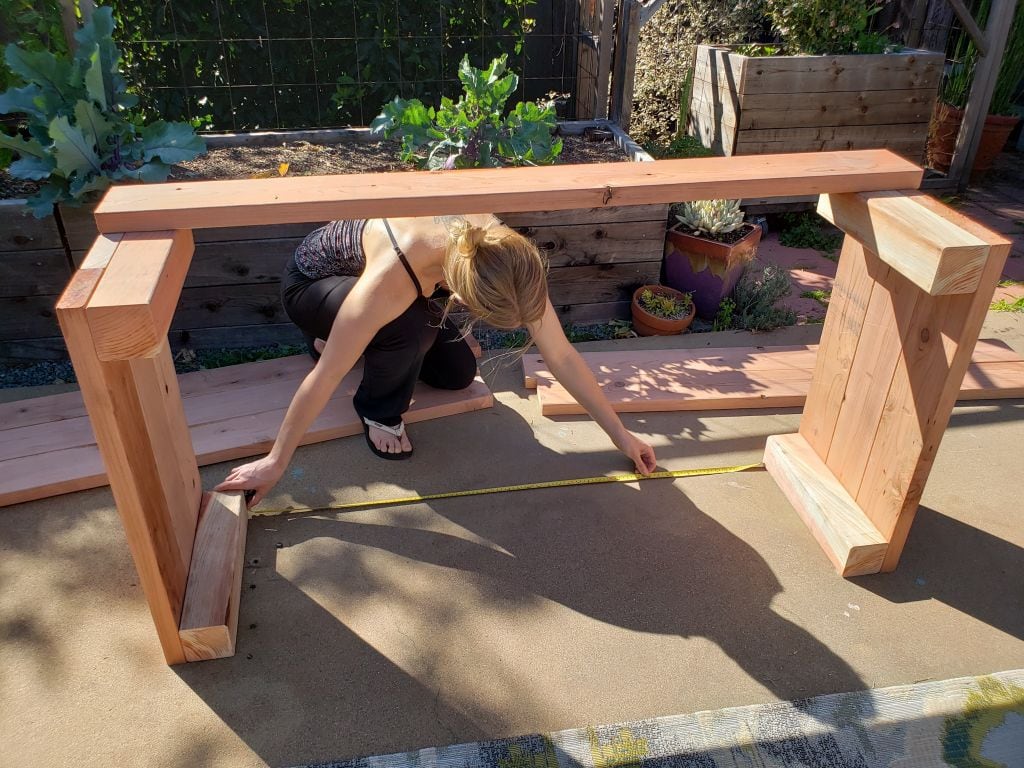
Thankfully , putting together a orthogonal planter box is just about one of the most round-eyed and straightforward DIY “ building ” projects out there . Do n’t be intimidated ! To make it even easy , I have createdthis stone’s throw - by - gradation tutorial(video include ) on how to design and build up a raised garden bottom .

Not feel up to building your own?There are some really first-class , durable , beautiful cedar raised bed kit useable out there . These ones from Gardener ’s Supplyget great reviews . They come in a mixed bag of sizing , and at 15″ deep , will provide a squeamish amount of origin space for your plants .
3) They won’t last forever
Unlike in - soil garden bed , most garden box will finally require repair or replacement . When that time comes , it mean a lot of work to move soil , replace boards , or substitute the bed entirely . The lifespan of a evoke garden bed reckon on the materials it is made of . For model , stone or block raise garden bed will last longer than wooden planter boxes . Well - made Sir Henry Joseph Wood beds will hold up far longer than badly - made wood bed .
I always suggest building raised bed from high - calibre 2 - inch thick hardwood timber such ascedar or heart redwood . Both of which are naturally rot- and termite - resistant , and can last well over a decade . Here on the west coast , heart redwood ( what we habituate ) is pronto uncommitted and just as affordable as cedar . Cedar is most vernacular on the east coast . To make woodwind instrument garden beds last even longer , reckon sealing the wood with anon - toxic wood sealersuch asGarden Seal . We applied several coat to the inside of our newest raised beds .
However , cedar and sequoia do cost more than cheaper pine wood , douglas fir , thinner 1 - inch boards , fence boards , plyboard , or repurposed fleck wood . However , those materials can cursorily rot , defer , or otherwise degrade . Never practice press treated timber – it is full of toxins!The upfront cost of caliber timber is a desirable investment when you ’re establish raised beds .

4) Raised beds are more permanent
Once you build and instal grow garden beds , it is relatively unmanageable to move them or modify the layout of your garden distance . Not that it ca n’t be done ! We have dug the stain out of many raised bed to relocate or re - design them over the years . We even bag up dirt and moved wood corner from a rental house to this dwelling . I ca n’t say it is fun to do though .
In direct contrast , you canmodify an in - ground garden space with far less effort ! All you need to do is dig up up a young area . If necessary , you could even address it all over and re - seed the area with dope to please a landlord . goddamn landlords .
5) Limited shapes and curves
Perhaps you delight the feel of a more mild , lifelike , and fall garden . In - terra firma gardens provide more flexibleness for originative form and form fewer hard argumentation than raised beds . Unless you ’re particularly handy and have the ripe tools , planter boxes are usually limited to square or rectangular chassis . However , we ’re able to add flow and softness to our garden space in other agency . For model , our sett - border planting country , curving pathways , and billowing shrubs and flowers bring balance to the integrated raise bed .
And that concludes the potential drawbacks and benefits of raised garden beds.
As you could see , the likely benefits of raised garden bed or in - primer coat gardens largely depends on your unequalled garden space , native soil , budget , aesthetic preferences , and prevalence of pests . For us , the benefit of rear garden beds clear outweigh the cons . Yet both styles of gardening are worthy and wonderful ! I hope that this clause give you some “ ah - ha ” moments as you specialise down which type of beds are good for you . Who knows , maybe you may do a little of each !