veg
tomato plant are among the most popular and exciting veggie to grow in your garden , but what should you do when your plants are only producing flower and no fruits ? These juicy red ( or orangish , yellow , or purple ) fruits require pollenation from fart and bees , or in some cases , mankind . If your tomato plant plants are dropping flowers or conk out to grow yield , you may call for to hand - pollinate them to insure you raise a harvestable yield .
Contents

Tomatoes are among the most popular and exciting veggie to grow in your garden , but what should you do when your plants only raise flowers and no fruits ? These gamy red ( or orange , yellow , or purple ) fruits require pollenation from wind instrument and bees , or in some cases , humans .
If your tomato plants are dropping flush or failing to produce yield , you may need to hand - pollinate them to assure you mature a harvestable yield . Let ’s dig into why , when , andhow to hand - pollinate tomatoes . It is n’t as knavish as it sound !
Why Hand-Pollinate Tomatoes?
Hand pollination can improve tomato yield , particularly in an enwrap environs ( like a greenhouse or indoor container garden ) or during risky atmospheric condition when natural pollinators are n’t dynamic .
Even when growing out of doors , nature sometimes fails to pollinate our tomatoes . If your flora fell flower or turn down to formulate yield , a fiddling human assistance can go a longsighted way .
The benefit of hand pollenation let in :
Do You Need to Pollinate Your Tomatoes By Hand?
Your tomato will probably need pollenation assistance if you ’re growing in a nursery , plastic tunnel , container , or windowsill . Certain conditions call for hand pollenation , such as a want of lead or grow in a protect garden area without air flow .
If there is bad weather condition , bees may not be fighting . If it is humid , wet , and muggy , the powdery pollen can clump together and not move , and you may need to pollenate your plant by hand .
Reasons to Pollinate to hired hand :
Reasons to Skip Hand Pollination :
Are Tomatoes Self-Pollinating?
tomato are of course self - pollenate monoecious crops . monecious mean that one plant has both male and distaff character .
Self - pollinating means one plant can multiply on its own . Moreover , tomato blossom are considered “ perfect ” or “ utter ” flowers because they have both the distaff ( pistil ) and manful ( stamen ) flower parts within each prime .
In other word , you do n’t need two tomato plants to produce a tomato plant yield … Well , sometimes . All botanic jargon aside , tomatoes are n’t always gross at pollinating . There are certain instances where born pollination is n’t pass off , and they need assistance moving the pollen from the distaff part to the virile part .

Wind and bees are the usual purveyor of Lycopersicon esculentum intimate favors , but current of air ordinarily does the bulk of the body of work . aviation either quivers the works and knocks the pollen loose or bollocks up picayune pollen granule from the anthers ( male parts ) to the sticky stigma ( female parts ) . In other Word of God , the pollen fall within the flower topollinate itself .
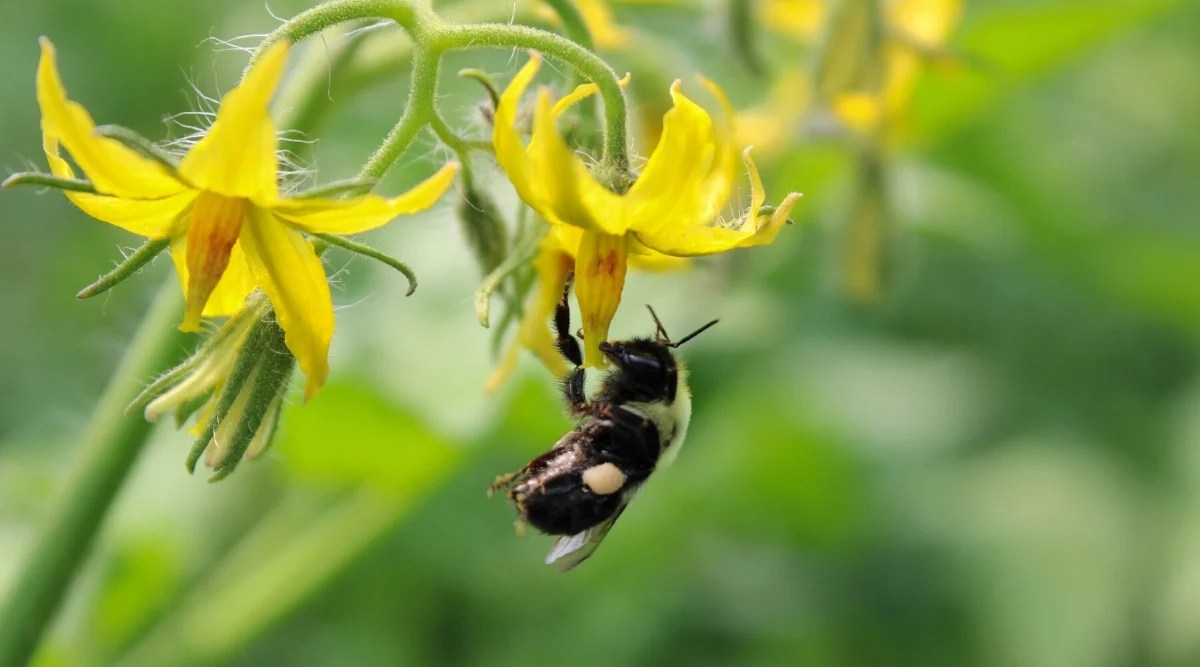
When your garden has abundant flowered resource , bee fly in to help . As they strain to reach the nectar inside a love apple flower , their furry dead body amass pollen and roll it around , effectively impress the pollen from the anther to the stain . If your plants continually fight with pollination , try toattract more pollinator to your gardenvia native plants .
8 Steps to Pollinate Tomatoes by Hand
paw pollinate is easier than it sounds . You do n’t even need to cognise the botanic science behind it ! Just suppose yourself as a little bee cumulate pollen and moving it around . You only need the correct timing , a paintbrush or toothbrush , and solitaire .
Choose the right time
The best clock time to hand - pollinate tomato flowers is in the middle of the twenty-four hour period when a industrial plant has several healthy , open yellow-bellied bloom . Ideally , choose a warm , cheery mean solar day with downhearted humidity .
Fortunately , this operation still works duringbad weather conditions . If you live in a crazy humid clime or just received a lot of rain , this method acting will still work , but you may choose for the electric soup-strainer to aid distribute the clumpy pollen more easy .
If you want to decamp all the step below , simplyshake your plant life . A firm shake from the top of the plant will have the flush to release pollen and diffuse it to the female flower parts . commercial-grade pollinators use galvanizing vibrator devices to achieve this on a big shell .

As a bonus , shaking can help you findtomato hornworms . If you rattle your Lycopersicon esculentum trellis around , hornworms will often siss at you ( those small demons ! ) , revealing their camouflaged office on the love apple foliation .
You could also add a inviolable rooter to the orbit to copy blow fart .
Use a small brush
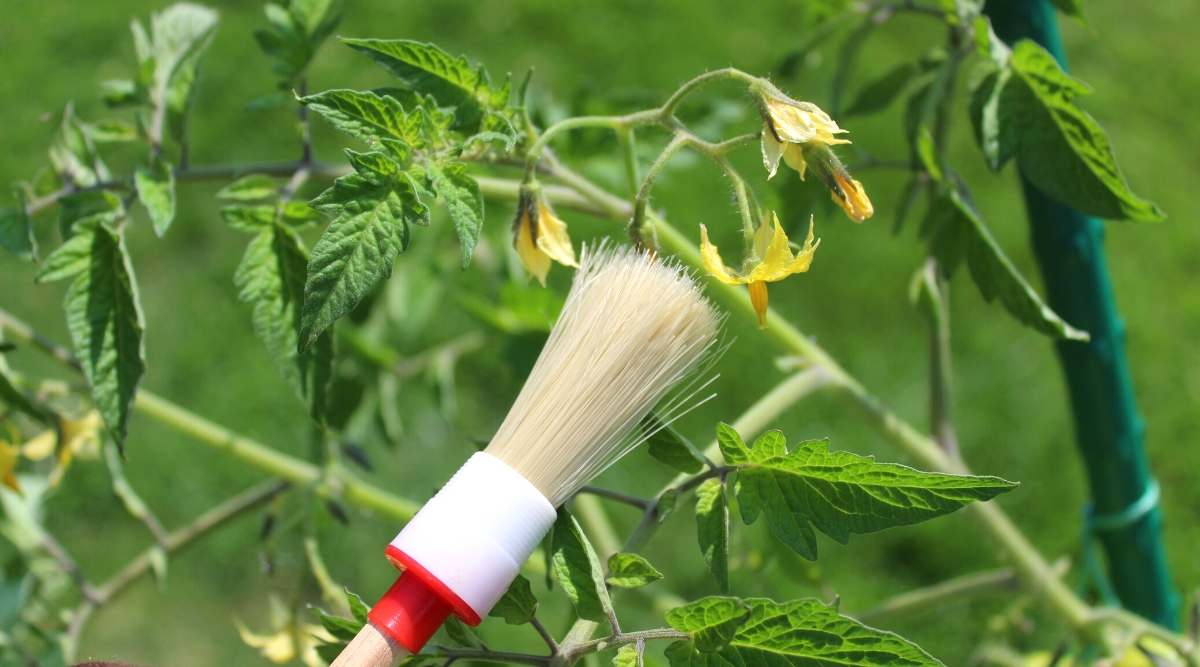
you could employ a tinypaintbrushor atoothbrushto hand - pollinate your tomatoes . Some people even use an galvanizing toothbrush to ramp up pollen distribution ! A Q - tip , or bad - example scenario , your finger can also crop .
Move the brush around inside the flower
Because Lycopersicon esculentum have complete flowers , you do n’t have to move pollen from one flower to another as you would with squash . Instead , move your tool around inside each flower , excite it well , and move to the next .
channelise pollen between blossom is no swelled slew if you grow the same variety . However , you could have a few fetid “ off - types ” if you cross - pollinate two different cultivars and then strain to save seed from the resulting yield . bad-tempered - pollination does not impact the type of fruit your parent industrial plant produces , only the ejaculate it generates .
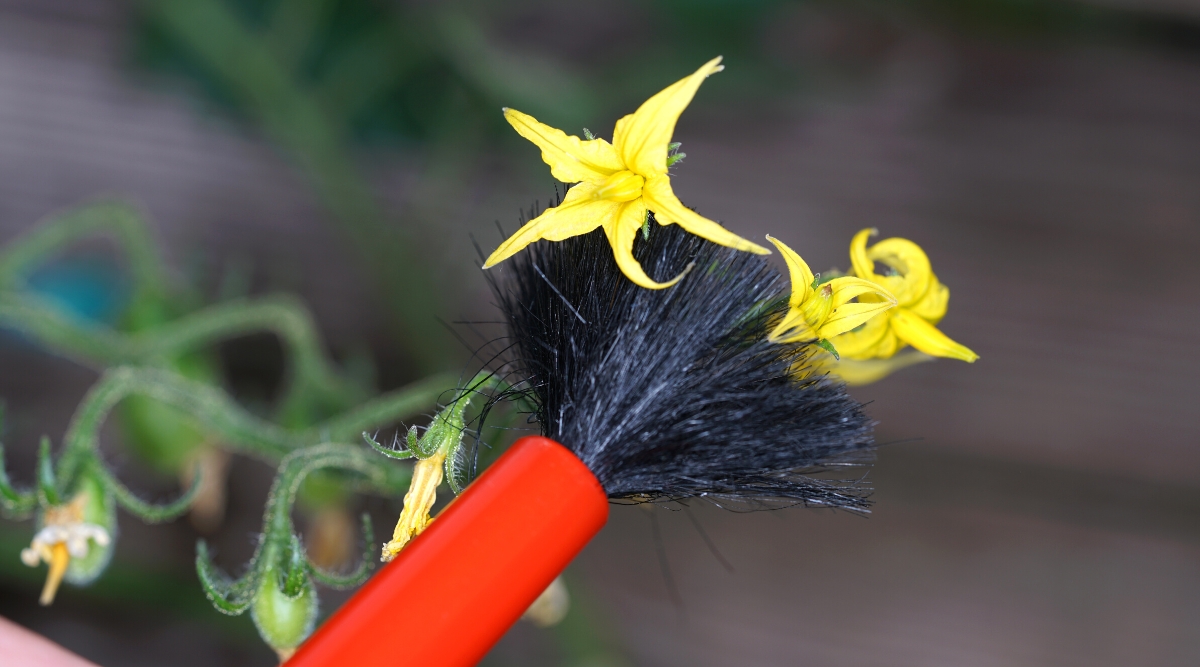
If you ’re using a paintbrush , gently sneak in it into an unfastened flower and move the tip of the brush around . you’re able to also hold the substructure of the flower and shake the bloom of youth , taking forethought not to remove it from the stem . Some citizenry muff into the blossom as they move the paintbrush .

If you ’re using an electric soup-strainer , turn the soup-strainer on and mildly place the back of the soup-strainer on the back of the bloom . Putting the real bristle of the thicket onto the flower is unnecessary . Avoid stick in the toothbrush into the peak or you might damage the flower .
If you prefer the Q - crown method , first use a traveling bag or bowl to collect pollen . view as the container under a cluster of flowers and lightly stir the plant life until you see yellow pollen falling out . Next , dip your Q - tip into the pulverization and transplant it to each flower . Roll the Q - summit around to good coat the floral portion . you could even use your finger !
Be very gentle
Tomato prime are fragile and can easily rive or fall from the plant . No matter what method acting you use , be careful not to damage the bloom . If you ’re afraid of stir the flowers , shake the plantis the idealistic method acting for you .
It ’s best to pass on pollinate with your bare workforce so gloves do n’t block your spry fingers . If you accidentally knock a few flowers off , no big deal ! Most tomato plant will spring up back more in a few days .
Repeat every 2-3 days
To see optimum yields , it avail to shake off , vibrate , or transplant love apple pollen every few day while conditions are ideal . This is n’t 100 % necessary , but it give you the maximal chance at success .
In my garden , I prioritise the tomato that need it most : those grow in the high tunnel and those that produce the largest heirloom fruit .
Check that tomatoes are pollinated
Observing the stem is the easiest means to tell if a Lycopersicon esculentum bloom is pollenate . Every heyday come out from the cardinal prow on a smaller green theme .
If the stem stays green and enlarges into alittle green bulbat the groundwork , the flower is successfully pollinated , and the yield is growing . The bulging maturation is an ovary where the fruit will grow .
pollenation has failed if the prime ’s stem turn yellow and begin to fade . You wo n’t see any enlarging ovary at its base .
In both lawsuit , the bloom will finally drop from the works , so do n’t panic if you see tomato flower on the soil . A cross-pollinate efflorescence willwilt within 24 hoursand fall off the works in a couplet of days .
bet on whether you have a definitive or indeterminate plant , your tomato may only create flowers during a two - week period ( determinate ) or continue produce flowers for the continuance of the time of year ( indeterminate ) .
Support plant health
Once you ’ve completed your love apple pollination missionary post , check that your plants receive everything they need . They should be robust and vibrant green with firm stalks and mass of leaves . They should activelyproduce raw flowers every weekand station out soft touch ( which you may desire to remove for optimal yield ) .
When a tomato plant life begins blossom and fruiting , avoid feed it any additional nitrogen . Too much nitrogen can promote overweening foliage growth .
We desire the plant to transport its zip into fruits ! Ideally , you should feed when planting with an all - intent blend likeEspoma Tomato - Tone .

After hired man pollination , it ’s a great time to add another dose ofTomato - toneor anyfertilizerhigh in phosphorus . Phosphorus ( the in-between number on N - P - K ) is most authoritative for producing declamatory , juicy , yummy fruit .
Be patient
Most love apple variety return matured yield two to three weeks after the flowers open . However , it should be clear whether pollination was successful within a calendar week .
Once the yield begins grow , all you postulate to do is be patient ! allow your tomato mature on the vine for the best flavour .
Final Thoughts
When nature ca n’t quite pollinate on her own , you could easily step in toboost your tomato yields . Your method does n’t matter if the bloom vibrate and escape from to allot pollen from the male to the female flower parts or if you manually apply pollen . Remember , be gentle and depend for the exaggerated floral stem base to indicate success !


