Just because two things reckon likewise does n’t think they behave the same manner .
Take clunking and prevail bamboo , for case . Or chocolate potato chip and oatmeal raisin cookies , if you require a non - botanical example .
We unite to vendors to aid you find relevant products . If you buy from one of our links , we may make a commission .

sure enough , both mannikin of bamboo provide an attractive aesthetic in the landscape painting .
And of line , both types of cooky have theappearanceof a delectable dessert . But if you expend one or the other from either span interchangeably , you ’ll be sorely disappointed .
Bite into an oatmeal raisin cooky expecting the predilection of coffee chip , and you ’ll experience a mouthful of fibre and sorrow .

Plant a running play type where you should have used a clumping type – or frailty versa – and you ’ll probably end up wholly dissatisfied .
I could rant about chocolate chip vs. oatmeal raisin all day , but for the saki of this scout and my ancestry pressure , rent ’s turn our aid back to clumping vs. running bamboo , and really break down their differences .
We ’ll even start with some prompt “ Bamboo 101 , ” if you ’re new to the Bambusoideae subfamily .

Your journey on the course of knowledge begin here :
What You’ll Learn
A Brief Bamboo Primer
It ’s hard to be a works swot on satellite Earth without at least having discover of bamboo .
Even non - unripened thumb probably know of these plantssomehow , whether as a staple crop in Asian cultures or as a panda ’s favorite solid food .
Belonging to the truthful grass category , i.e. the Poaceae , Bambusoideae is a subfamily of 1400 - plus species of tall , treelike , and ( mostly ) evergreen perennial grasses , all contained within 115 or so genera .

Species of bamboo go on naturally on every continent save for Europe and Antarctica and turn in a diverseness of environment , from lowland riverside to cold mountains to island tropics .
Bambusoideae species come in practically all sizes . The smallest only reach four to six inches in height , while the giant , Dendrocalamus giganteus , is one of the largest species , with a maximal height of over 100 feet !
The woody stems of these plant , aka theculmsor canes , are unremarkably hollow between the ringed node , which sprout lateral beginning and leafy shoots .

With an super speedy growth rate , culm reach their full stature in their first mature season , remain slim all the while and never increase their girth via secondary growth .
A new generation of culms egress each year with increased size of it and thickness , impart the entire settlement wait bigger and larger with each lead season .
New culm are produce via shallow rhizomes , which allow the colony to circularize far and wide .

A large woodlet may not be a clump of neighboring specimen , but rather , the far-flung mass of a individual plant !
These rootstalk are super important – especiallywhen comparing clip-clop and running types . In fact , it ’s the rhizome that principally differentiate the two !
Clumping Bamboo
Clumping types behave on the dot as their name would imply : their culms grow together in tightly - pack clumps .
As a result , clumping eccentric do n’t cover much veridical land with their culms , and the territory that theydoconquer is take on over very slowly : a simple distich inches per year .
Below the soil air , the pachymorph rhizomes of clumping case are thick and upwardly curve , and exhibit very little horizontal increment before protrude upward to form a culm . As a resultant role , they are mostly take for non - invasive .

What clumper rhizomes want in horizontal expansion speed they make up for in vertical vigor , as clumping bamboo can get upwards faster than lead types .
Clumper rootstock also expand slow , but with gravid metier – they can compete with the roots of side by side flora , crack containers , and inflict detrimental pressure on nearby structures such as walls , fence , and walkways .
Clumping types grow in a jolly round Supreme Headquarters Allied Powers Europe , and run to be narrower at their basis and all-encompassing towards their tops .

Clumpers ca n’t form wide - propagate screens like runners can , but they make up for it by forming unbelievably dense ones , as their culm pop up aright next to each other .
This density comes at a cost , though : when culm at the inside of the clump die , they ca n’t be reached for pruning without first remove verboten , survive culms .
If you prefer to dispense with the stunned culms and leave alone the inner dead culms alone , then the drained growth hinders the entire flora ’s coming into court , and could even become a weak spot for pests and pathogens to exploit .
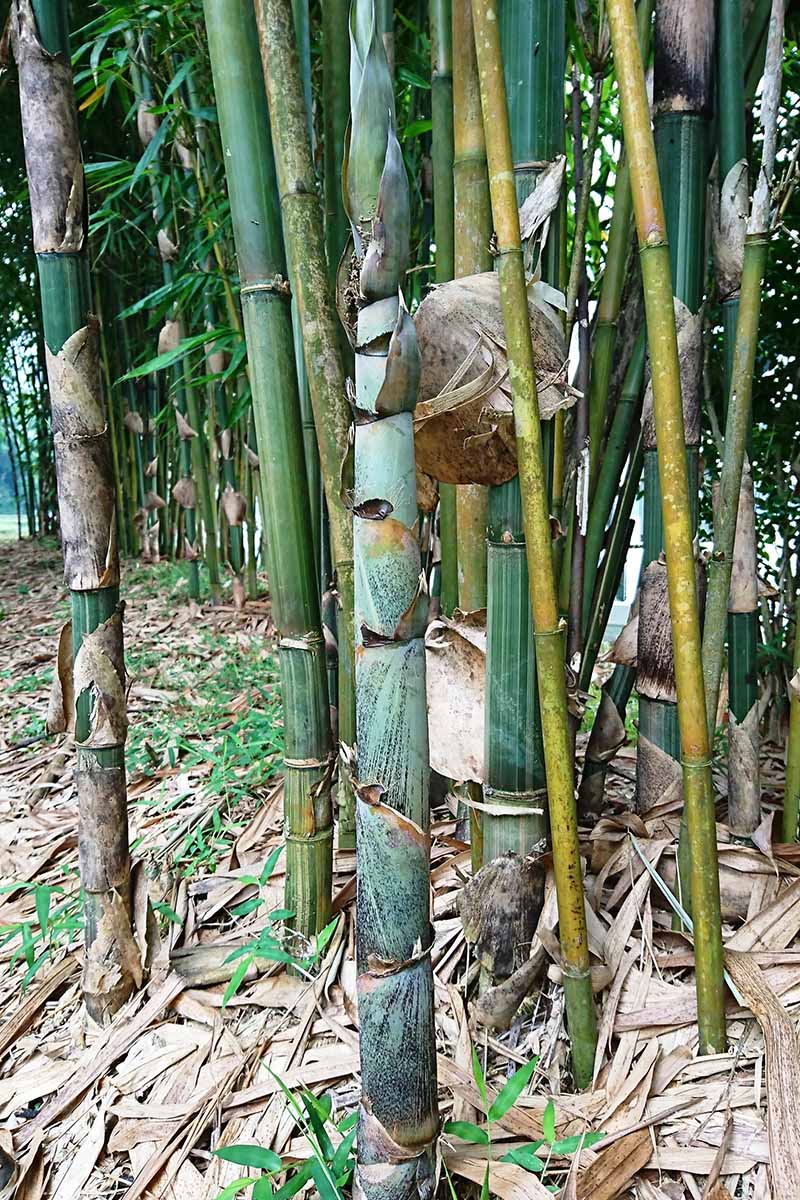
Overall , clumping case are n’t as dusty - Thomas Hardy as running type , although there are craggy clip-clop varieties that can handle the low temperature .
A clumper ’s thickly - carry form arrive at it the gross selection for a specimen or accent planting , rather than a wide - spreading blind or edge .
This should also be your selection when you have a special amount of real estate for planting , or in cases where you do n’t want the flora to circularize far and wide . But be wary of structurally contained spaces – you would n’t want to cause any damage !

Running Bamboo
Now , let ’s turn our attention torunningbamboo !
While clumpers originate their culm closely together via thick rootstalk , runner have thinner leptomorph rhizomes that can carry indefinitely before sprouting a new culm .
Clumpers may be able-bodied to form impressively dull specimens , but an entire grove of Bambusoideae ? That would consist of running character .
Clumpers may mature upwards quicker , but runner can circularise several feet per class and satiate in with outstanding amphetamine than clumpers do .
They ’re optimal for form quick screens , grove , and hedging , and their ascendant systems are even equal to of corroding mastery .
Their rootstock do n’t inflate as strongly as those of a clumper , which produce them less likely to break their container , should you decide to go with a potted planting .
Runners are capable of growing in narrow areas , such as the thin airstrip of ground between suburban properties . This makes them an idealistic border screen door for privacy .
Runners are more potential to arise out of leap , given their highly fast enlargement charge per unit , but each individual running rhizome is a great deal easier to physically remove from the ground than clumper rhizomes are .
Regardless of which character you ’re managing , you ’ll have to be canny – clumpers tend to go through obstacle , whereas runners are quick to change directions if they run into resistance .
As running types declare oneself a prominent selection of mintage overall , it ’s often comfortable to find a variety of running bamboo for your particular mood .
But some run coinage are listed as trespassing in part of the US , and therefore should n’t be considered .
Which Should You Use?
in person , I ’m a fan of loose decision - devising , so here ’s the simplified gist :
If you ’re try …
… then go with clumping specimens !
But if you ’d rather have …
… then you should choose a running specimen !
But not every “ clumping or running ” determination will be all the way - cut .
There ’s nothing wrong with consult your local landscaping professional or more experient bamboo gardeners for guidance .
Perhaps you’re able to learn from their successes and save yourself some mistakes !
Put Some Bamboo in the Queue
I ’ve been hangdog of order together some pretty atrocious queues , particularly when it comes to music .
conceive me , “ receive aux ” on long road trips with acquaintance is not a privilege I incline to hold onto for long .
But I ’m confident in this claim : adding clippety-clop and/or running bamboo to the long list of plants you hope to turn at some stop would be a smart pick .
Now that you know what function they ’re well suited for , you ’ll be able to enjoy them even more !
And formore information on uprise grasses in your landscape painting , have a read of these guides next :
© Ask the Experts , LLC . ALL right RESERVED.See our TOSfor more details . Uncredited photos : Shutterstock .
About
Joe Butler
